
Water Damage Restoration in Grandview Heights, West Palm Beach
Water damage restoration Grandview Heights West Palm Beach homeowners search for is a historic-district question in the shadow of downtown. Grandview Heights is one of the city's oldest neighborhoods — a designated historic district of 1910s-through-1930s bungalows and shotgun cottages tucked directly beside CityPlace, the convention center, and downtown, on low streets that predate the towers next door. The losses here are older-home losses: century-old plumbing, masonry and wood-frame construction that hides water, low elevation that floods in hard rain, and the pressures of dense redevelopment all around a small historic core. Restoration Doctor of West Palm Beach responds 24/7 at (888) 293-5663.
Grandview Heights packs a lot of history onto small lots. Bungalows built in the early twentieth century run on original or patched plumbing, and their plaster, stucco-over-masonry, and wood-frame assemblies hold and hide water in ways modern drywall does not. The historic-preservation standards that saved the neighborhood from the surrounding boom also mean owners expect original detailing restored rather than replaced.
We treat a Grandview Heights loss as an old-house problem beside a modern city — find the hidden water, preserve what can be saved, and correct the source. Here is how the district's historic construction, low elevation, and dense surroundings shape restoration.
How we dry Grandview Heights properties
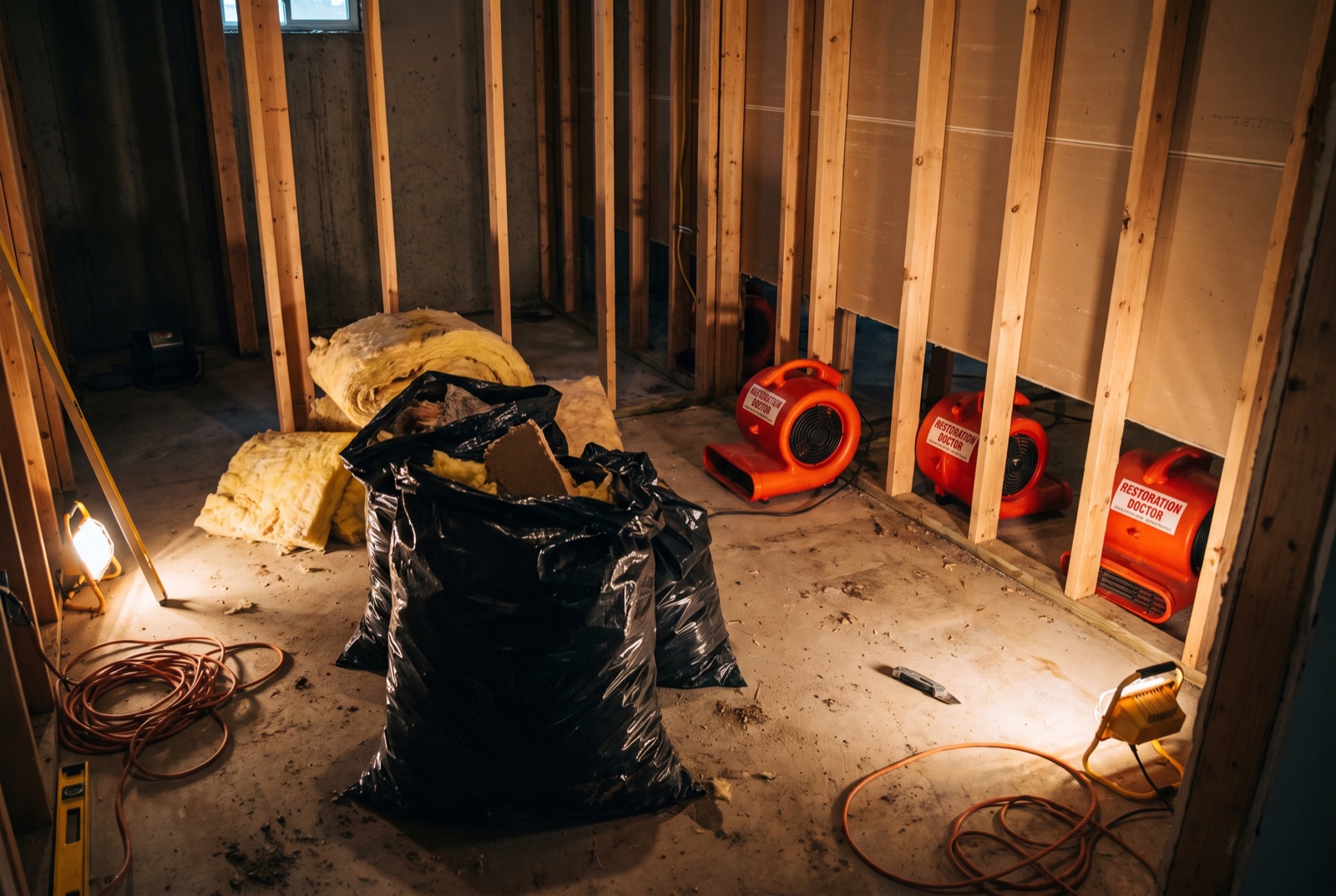
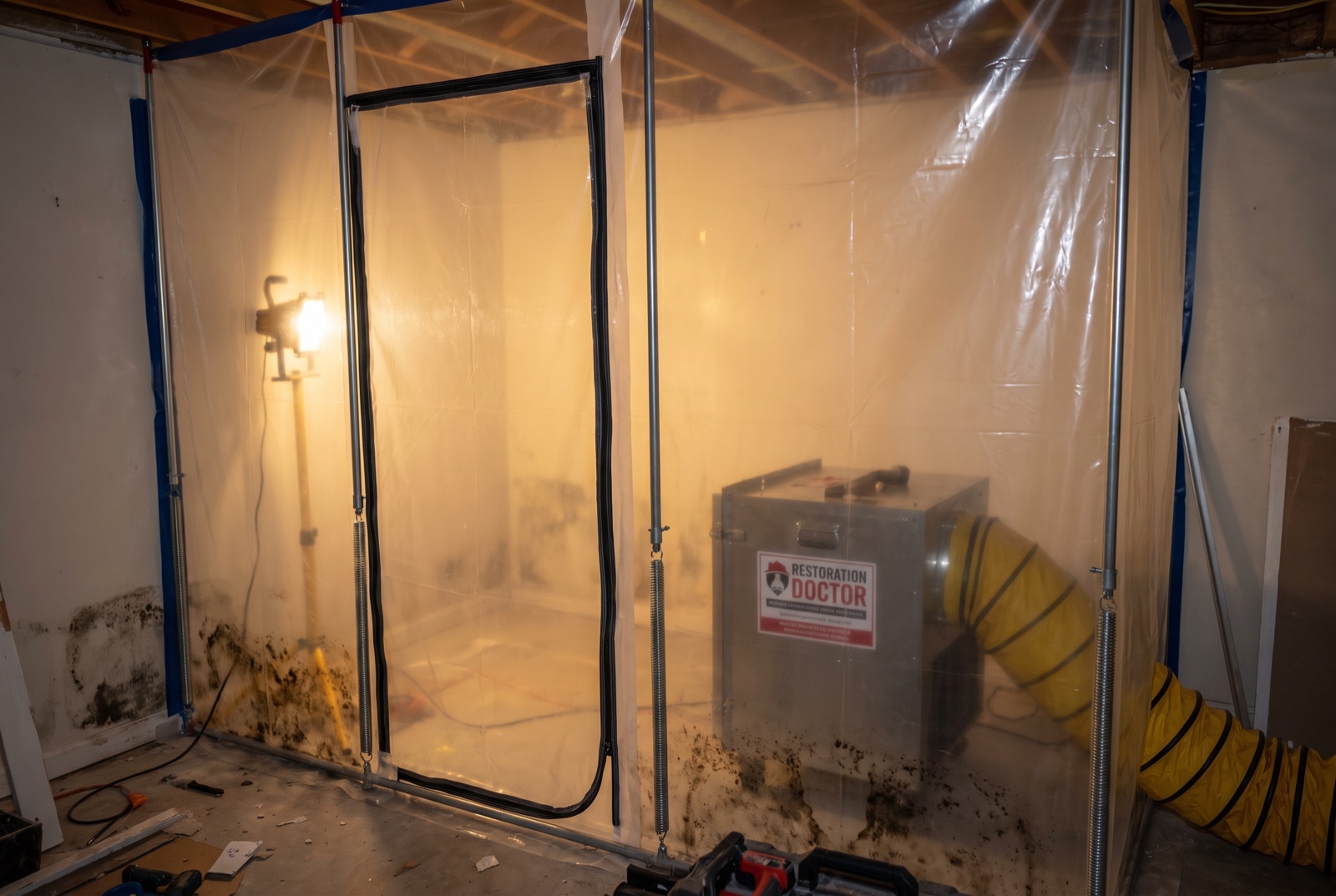
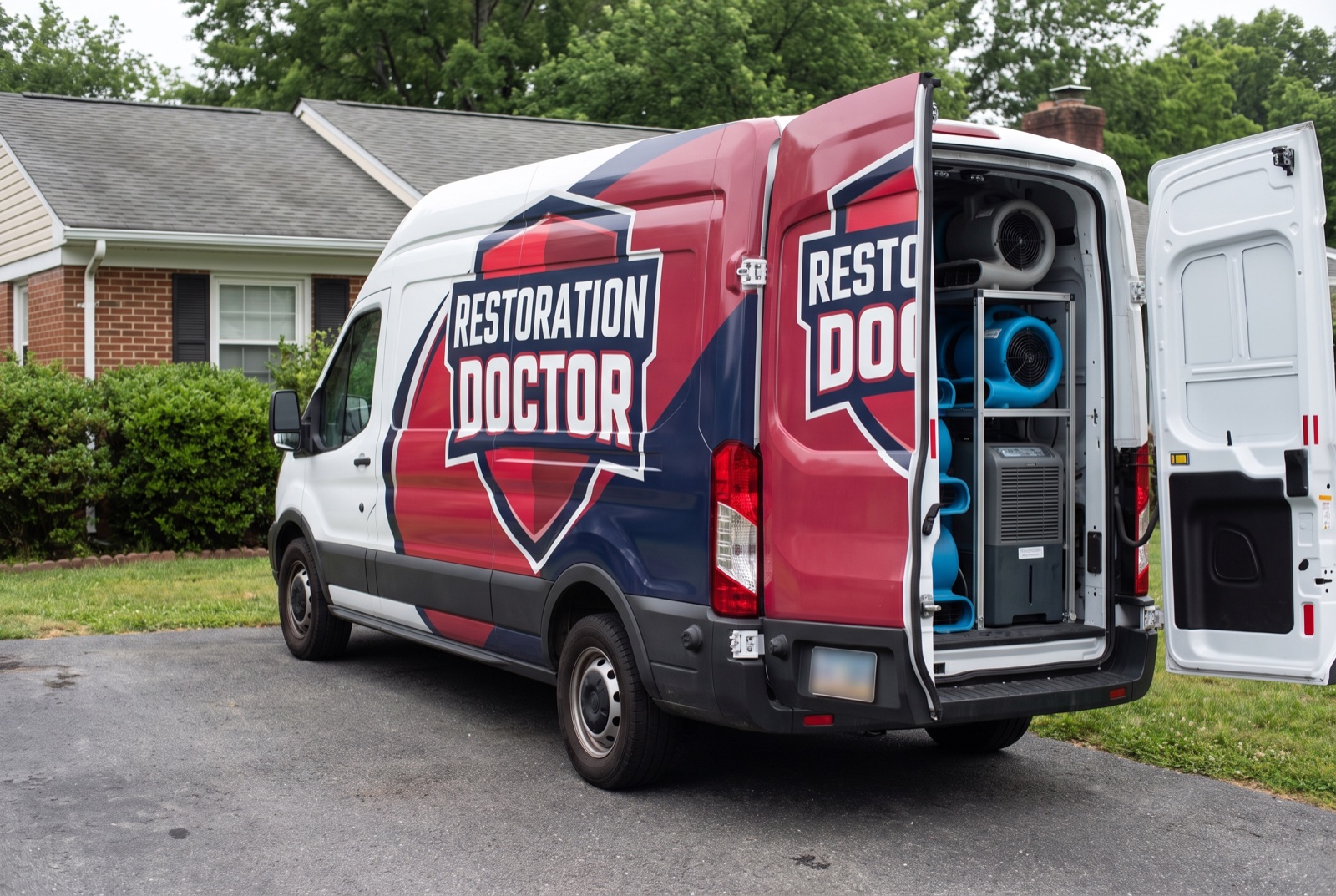
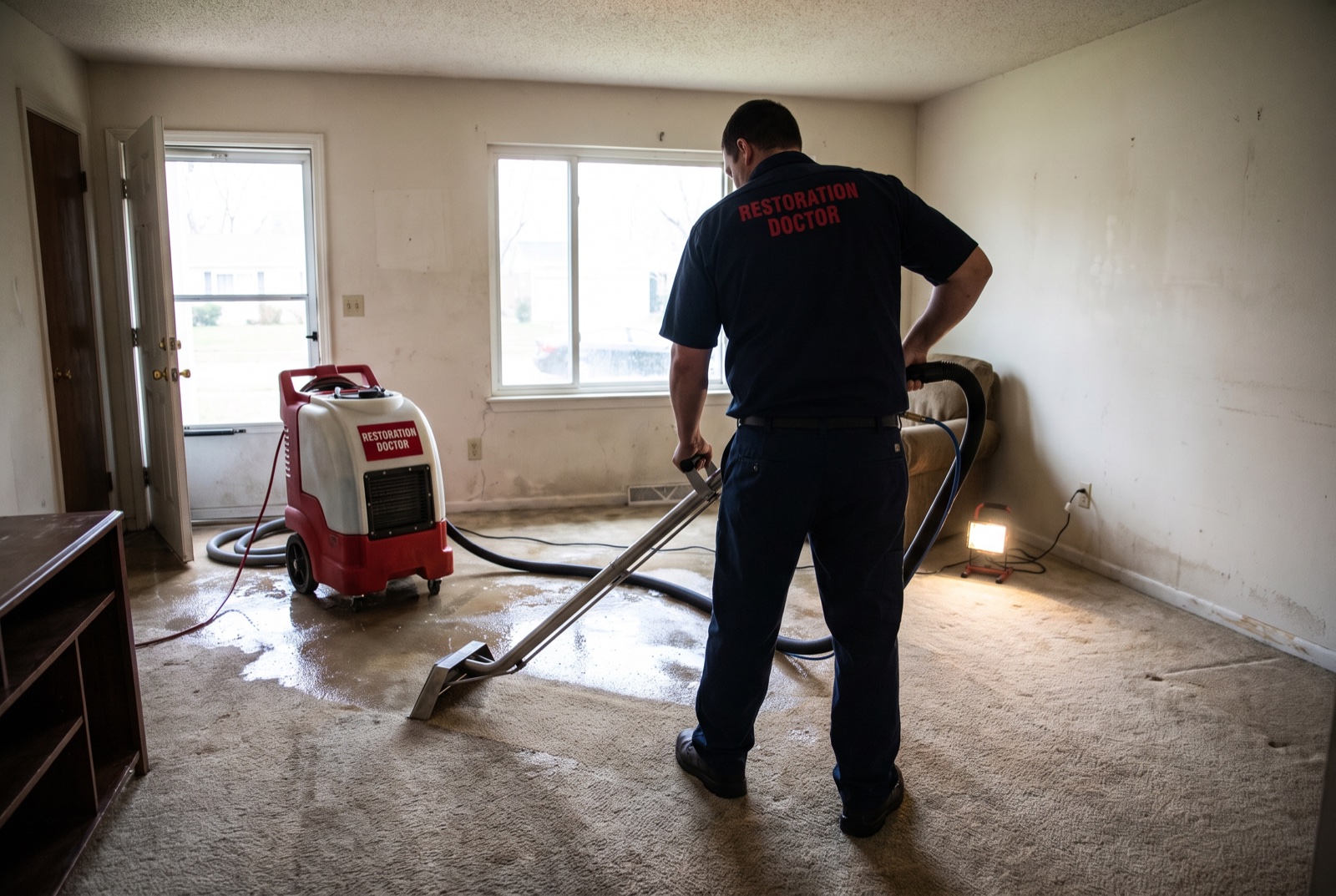
Illustrative views of the equipment and process our crews deploy — extraction, air movers, LGR dehumidification, moisture mapping, and containment.
How water damage behaves in Grandview Heights
Aging plumbing and hidden interior losses
Most Grandview Heights losses start inside, in the bungalows' aging systems. Supply lines fatigue and let go, cast-iron drains scale and crack, roofs let wind-driven rain into attics and wall tops, and condensate lines overflow. Because plaster and masonry assemblies hide moisture, these interior losses are frequently larger than they look — a small ceiling stain over a thoroughly saturated wall cavity is a common presentation. A fast, superficial dry-out leaves the wall bases and framing wet.
Our process runs to IICRC S500: classify the water, map moisture with meters and thermal imaging, extract, and build a drying system sized to the real load, verifying against documented dry-standard targets rather than a calendar. In older assemblies that patience distinguishes material that can be dried and kept from material that has to come out — and in a historic bungalow beside a redevelopment zone, keeping salvageable material matters.
Low elevation and rain flooding beside the city
Grandview Heights sits low, and its early-twentieth-century street grid drains through systems built long before the towers next door. Heavy rain overwhelms that drainage and sends stormwater across low streets and thresholds into ground-floor homes, and dense adjacent redevelopment can alter local drainage patterns in ways that concentrate water on the historic blocks. Stormwater is contaminated under IICRC S500 and generally excluded from standard homeowner policies — addressed, if at all, under separate flood coverage. Policies vary and we make no promises; we document the entry path and water direction so the loss is classified from evidence.
Because we work for you rather than the carrier, the file we build — entry path, affected materials, timeline — is yours to give whichever policy applies, and we do not negotiate the claim on your behalf.
Canopy humidity, mold, and the owner's authority
The district's mature canopy keeps homes shaded and damp, and behind older finishes an unaddressed leak colonizes fast in South Florida's humidity, often before a stain appears. We treat every water loss here as a mold-prevention project and every mold project as a moisture investigation, finding and correcting the water source so the fix is permanent. Remediation follows IICRC S520 with containment and physical removal.
And the decision to begin is yours. As the property owner you choose your restoration contractor and can start emergency mitigation to stop ongoing damage without anyone's pre-approval. We work for you, not the insurance company — we begin on your authorization, preserve the historic material we can, correct the moisture source, and hand you the carrier-ready claim file.
Grandview Heights homes and how they fail
Grandview Heights is small, dense, and historic: 1910s-1930s bungalows, shotgun and Frame Vernacular cottages, and early Mediterranean homes on tight lots, with newer infill and mid-rise development pressing in from downtown and CityPlace. Plaster-on-lath interiors, stucco over masonry and hollow tile, and aging wood framing hold water and hide it, so the visible waterline understates a loss and our drying relies on thermal imaging and meters. Where finishes and detailing are historic, our default is to preserve salvageable material rather than default to demolition.
Age drives the failures. Original galvanized and early copper supply lines, decades-old cast-iron drains, aging roofs, and window and door details never built watertight are the recurring sources, along with year-round A/C condensate. The small footprints and dense surroundings mean adjacent construction dewatering, drainage changes, and the low elevation all add exposure to the historic homes at the core.
Grandview Heights neighborhoods we serve
Real Palm Beach County communities — and the water losses we most often see in each.
Early-1900s bungalows and cottages where plaster and masonry hide water and canopy speeds mold.
Historic blocks pressed against redevelopment where altered drainage concentrates rain flooding.
Low streets where heavy rain brings stormwater to ground-floor homes.
Compact historic cottages on wood frame where hidden water and mold recur.
Transition to the adjoining historic district with the same aging-systems loss pattern.
Full restoration services in Grandview Heights
One operation covers every category — from emergency mitigation to full reconstruction.
Water Damage Restoration
Extraction, structural drying, and moisture verification for pipe failures, king-tide intrusion, and unit-to-unit leaks in West Palm Beach homes, condos, and canal-front properties.
Storm & Hurricane Damage Restoration
Emergency board-up, tarping, storm-surge and flood extraction, and post-hurricane structural drying for homes, canal properties, and condo towers across West Palm Beach and Palm Beach County.
Mold Remediation
S520-based mold remediation: containment, HEPA-filtered removal, moisture-source correction, and post-remediation verification for West Palm Beach homes, condos, and waterfront properties.
Sewage Cleanup
Category 3 water mitigation: sewage extraction, contaminated material removal, disinfection, and structural drying for backups, drain failures, and tidal surcharge in Palm Beach County.
Fire & Smoke Damage Restoration
Structure securing, soot and smoke residue removal, odor treatment, and combined fire-and-water mitigation for West Palm Beach and Palm Beach County properties.
Contents Restoration & Pack-Out
Full-chain contents handling for Palm Beach County: barcode-tracked inventory, pack-out, restoration cleaning, climate-controlled storage, and organized pack-back.
What Grandview Heights homeowners look for
Grandview Heights owners fought to preserve their district and are right to distrust ratings a company writes about itself. Ours are not self-reported: verified customer reviews for the Restoration Doctor operation are hosted at RestorationDoctorsReviews.com, linked to the genuine Google source rather than pasted onto this page.
Judge the record yourself, then call (888) 293-5663 when water gets into your Grandview Heights home.
Frequently asked
Active water, mold, fire, or sewage event?
Connect directly with the Restoration Doctor team for your region. Crews are on standby 24/7 with documented response protocols.